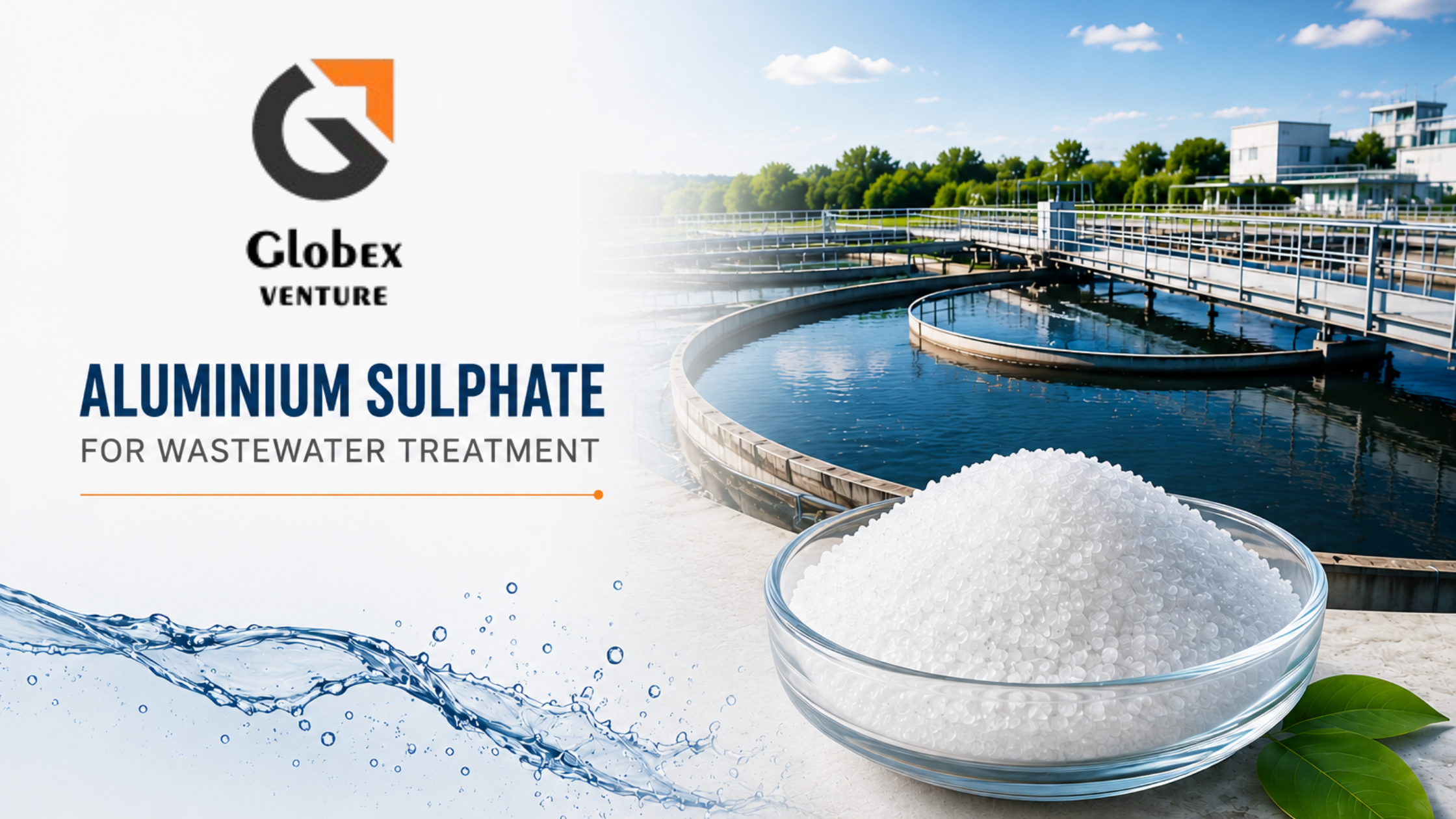
Aluminium sulfate (Al₂(SO₄)₃) is a high-purity, non-ferric coagulant widely used in U.S. wastewater treatment. It quickly neutralizes particle charges and forms flocs, so solids, turbidity, phosphates and other impurities can settle out. This improves water clarity and “helps facilities meet site-specific turbidity and phosphorus discharge requirements. Non-ferric alum has very low iron, ensuring a clear effluent without brown tint.
This guide explains Non-Ferric Aluminium Sulphate, including its specifications, treatment process, dosage recommendations, key industrial applications, and performance benefits. Explore safety, storage, and sourcing tips. You’ll also gain practical insights for selecting the right wastewater treatment solution and a trusted supplier.
What Is Aluminium Sulfate?
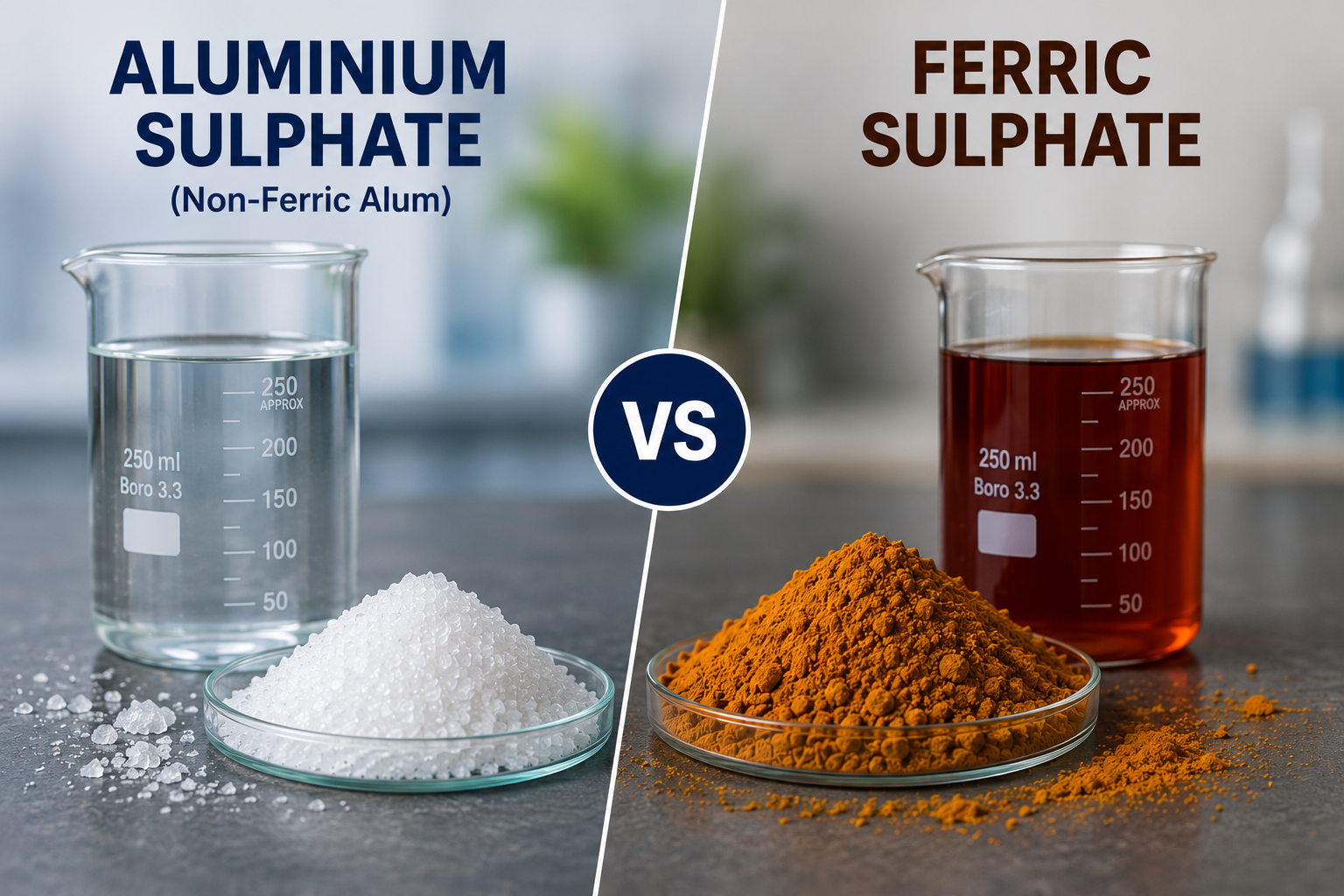
Aluminium Sulfate (Al₂(SO₄)₃·18H₂O), also known as alum, is a widely used coagulant in drinking water and wastewater treatment. With CAS No. 10043-01-3, this white, water-soluble compound helps remove turbidity, suspended solids, and contaminants by neutralizing particle charges and forming settleable flocs.
Non-Ferric Aluminium Sulfate contains very low iron content (Fe <0.01%), making it ideal for applications requiring high water clarity and no staining. It typically contains ≥17% Al₂O₃, offers excellent solubility, and is trusted across municipal and industrial water treatment systems.
How Aluminium Sulfate Works in Wastewater Treatment
Aluminium Sulfate plays a critical role in wastewater treatment through a three-step process: coagulation, flocculation, and sedimentation. This process removes suspended solids, colloids, organic matter, and other contaminants that do not settle naturally.
- Coagulation – Aluminium Sulfate is rapidly mixed into the wastewater. The released aluminum ions (Al³⁺) neutralize the negative charges on particles such as clay, silt, organic matter, and bacteria. This destabilizes the particles and prepares them for removal.
- Flocculation – The water is gently mixed to encourage the neutralized particles to collide and bond together. These larger particles, known as flocs, contain impurities such as suspended solids, phosphates, bacteria, and organic contaminants.
- Sedimentation – The heavy flocs settle to the bottom of the treatment tank by gravity, leaving clarified water behind. The settled sludge is then removed for dewatering, while the treated water typically undergoes filtration and disinfection before discharge or reuse.
Treatment Process at a Glance
• Coagulation: Aluminium Sulfate neutralizes particle charges.
• Flocculation: Particles combine to form larger flocs.
• Sedimentation: Flocs settle, producing clear water.
Why Is Aluminium Sulfate Effective In Water Treatment?
Aluminium Sulfate forms aluminum hydroxide precipitates that capture and remove fine particles and contaminants from wastewater. This “sweep flocculation” mechanism improves water clarity and treatment efficiency.
Determining the Right Dosage of Aluminium Sulfate
The optimal Aluminium Sulfate dosage depends on wastewater characteristics, turbidity levels, and water chemistry. Treatment plants typically perform a jar test, where different alum doses are tested to identify the amount that produces the largest flocs and clearest water.
Typical dosage ranges from 10-50 mg/L or higher, depending on treatment requirements. Always confirm the correct dose through jar testing and laboratory analysis for best results.
6 Benefits of Aluminium Sulfate for Wastewater Treatment
Aluminium Sulfate is one of the most widely used coagulants in wastewater treatment due to its effectiveness, affordability, and reliable performance.
- Excellent Turbidity and Solids Removal
Aluminium Sulfate rapidly forms flocs that capture suspended solids, colloidal particles, and impurities. This improves water clarity and reduces turbidity in both municipal and industrial wastewater treatment systems.
- Effective Phosphorus Removal
Alum reacts with phosphate to form insoluble aluminum phosphate, making it highly effective for phosphorus removal and helping facilities meet discharge regulations.
- Reduces Organic Contaminants
The flocculation process removes a portion of organic matter, helping lower BOD, COD, color, and other dissolved contaminants present in wastewater.
- Suitable for Multiple Industries
Aluminium Sulfate is used across municipal water treatment, wastewater treatment, textiles, paper manufacturing, food processing, leather processing, mining, and other industrial applications.
- Cost-Effective Treatment Solution
Compared to many alternative coagulants, Aluminium Sulfate offers a lower treatment cost while delivering reliable clarification and contaminant removal at scale.
- Consistent and Reliable Performance
High-quality Non-Ferric Aluminium Sulfate provides excellent solubility, low iron content, and consistent coagulation performance, helping treatment plants achieve stable results batch after batch.
Aluminium Sulfate remains a trusted solution for industrial and municipal wastewater treatment, providing effective clarification and improved water quality.
9 Major Industrial Applications of Aluminium Sulfate
Aluminium Sulfate is a versatile coagulant used across municipal and industrial sectors for water clarification, solids removal, and process improvement.
- Municipal Water Treatment
Aluminium Sulfate is widely used in drinking water treatment plants to remove turbidity, suspended particles, and contaminants. It also supports phosphorus removal and effluent polishing in wastewater treatment facilities.
- Wastewater Treatment Plants
In municipal and industrial wastewater treatment, Aluminium Sulfate improves solid-liquid separation, reduces suspended solids, and enhances phosphorus removal for regulatory compliance.
- Textile and Dyeing Industry
Aluminium Sulfate acts as a dye-fixing agent and helps remove color, dyes, and suspended particles from textile wastewater before discharge.
- Paper and Pulp Industry
Known as papermaker’s alum, Aluminium Sulfate is used for paper sizing and fiber retention. It also helps clarify paper mill wastewater by removing fibers and fillers.
- Food and Beverage Industry
Sugar, starch, and food processing facilities use Aluminium Sulfate for clarification processes and wastewater treatment to reduce turbidity and organic impurities.
- Pharmaceutical and Chemical Manufacturing
Aluminium Sulfate supports process operations and helps treat wastewater containing fine particles, suspended solids, and organic contaminants.
- Leather Processing
Tanneries use Aluminium Sulfate to reduce suspended solids and assist in the treatment of wastewater containing chromium, sulfides, and organic matter.
- Mining and Metal Processing
Aluminium Sulfate helps remove fine clay particles, suspended solids, and certain dissolved metals from mining runoff and industrial process water.
- Power Plants and Cooling Systems
In selected industrial water treatment applications, Aluminium Sulfate improves sludge settling and water clarification within cooling and process water systems.
Its broad application range, proven performance, and cost-effectiveness make Aluminium Sulfate a preferred choice for water and wastewater treatment across industries.
Aluminium Sulfate Dosage and Jar Testing for Wastewater Treatment
Selecting the correct Aluminium Sulfate dosage is essential for effective wastewater treatment. An insufficient dose can reduce treatment efficiency, while excessive dosing increases chemical costs and sludge generation.
Why Jar Testing Is Important
A jar test helps determine the optimal Aluminium Sulfate dosage for your specific water conditions. Since water quality varies from site to site, jar testing provides the most accurate dosage recommendation.
How to Perform a Jar Test
- Collect representative water or wastewater samples.
- Add different Aluminium Sulfate dosages to each sample (e.g., 10, 20, 30, and 40 mg/L).
- Rapidly mix to disperse the coagulant.
- Slowly mix to promote floc formation.
- Allow the flocs to settle.
- Compare water clarity, floc size, and settling performance.
The ideal dosage produces the clearest water and the strongest, fastest-settling flocs.
Factors Affecting Aluminium Sulfate Dosage
Several water quality parameters influence the required dosage:
• Turbidity and suspended solids levels
• pH and alkalinity
• Temperature
• Organic matter concentration
• Phosphorus content
• Industrial process characteristics
Higher turbidity and contaminant levels typically require higher Aluminium Sulfate doses.
Typical Aluminium Sulfate Dosage Range
Typical dosages vary depending on water quality and treatment objectives:
• Municipal Water Treatment: 10-50 mg/L
• Industrial Wastewater Treatment: 20-200+ mg/L
• High-Strength Effluents: Site-specific testing required
These values serve as starting points only and should always be verified through jar testing.
pH Considerations
Aluminium Sulfate performs best within an optimal pH range, typically between pH 5 and 6. Since alum lowers pH during treatment, some systems may require lime or caustic addition to maintain effective coagulation conditions.
Best Practices for Accurate Dosing
• Always perform jar testing before full-scale application.
• Monitor pH, turbidity, and settling performance regularly.
• Adjust dosage based on seasonal and process changes.
• Consider polymers or coagulant aids for high-solids wastewater.
Proper jar testing and dosage optimization help maximize treatment efficiency, improve water clarity, and reduce overall operating costs.
Why Aluminium Sulfate Remains a Preferred Coagulant
Aluminium Sulfate continues to be one of the most trusted coagulants in water and wastewater treatment due to its proven performance, affordability, and ease of use.
Key advantages include:
• Effective removal of turbidity, suspended solids, and organic contaminants.
• Reliable phosphorus reduction in municipal and industrial wastewater treatment.
• Consistent coagulation and floc formation across a wide range of applications.
• Cost-effective treatment compared to many advanced coagulants.
• Widely available and easy to integrate into existing treatment systems.
• Suitable for drinking water treatment, wastewater treatment, and industrial effluent treatment.
For many treatment facilities, Aluminium Sulfate offers the ideal balance of performance, operational simplicity, and treatment cost.
Why Choose Non-Ferric Aluminium Sulfate?
Non-Ferric Aluminium Sulfate contains extremely low iron content, making it the preferred choice for applications where water clarity and product purity are important.
- Superior Water Clarity – The low iron content helps prevent discoloration and supports the production of clear, high-quality treated water.
- Consistent Treatment Results – High-purity Aluminium Sulfate delivers dependable coagulation, floc formation, and sedimentation performance, helping operators achieve stable treatment outcomes.
- Reduced Risk of Staining – Unlike products with higher iron content, Non-Ferric Aluminium Sulfate minimizes the risk of staining, color formation, and unwanted deposits.
- Suitable for Critical Applications – Its purity and performance make it ideal for municipal water treatment, wastewater treatment, textile effluent treatment, paper mills, food processing facilities, and other industrial applications.
By combining strong coagulation performance with low iron content, Non-Ferric Aluminium Sulfate remains a reliable solution for efficient water and wastewater treatment.
How to Choose the Right Aluminium Sulfate Supplier
When selecting a vendor for alum, consider:
- Product Quality: Ensure lab certificates and specs. Look for high alumina content and low Fe (as Globex’s 0.01%).
- Technical Data: A supplier should provide a detailed spec sheet, MSDS, and application guidance.
- Supply Capacity: For large projects, confirm they can deliver in bulk (tons) consistently. Globex is export-ready with global logistics.
- Industry Experience: Choose a supplier familiar with municipal water industry needs, not just commodity shipping.
- Certifications/Standards: For drinking water use, check NSF/ANSI 60 compliance (for chemicals in potable water). If NSF certification is available, it’s a strong plus (though not always listed, it’s an expectation).
- Local Support: A supplier with technical support or lab services is valuable. They can advise on jar testing and troubleshooting.
- Reputation: Look for suppliers with history in water treatment. Globex lists many international clients and emphasis on quality.
Inquiries should be specific: ask for specific gravity, moisture content, grade (dry alum vs hydrated), and shipping terms. Ask about shelf life and shelf stability too.
Why Choose Globex Venture as Your Bulk Aluminium Sulphate Supplier?
When sourcing Aluminium Sulphate for water treatment, product quality, consistency, and supply reliability are critical. Globex Venture delivers all three, making us a trusted partner for industrial and municipal buyers worldwide.
High-Purity Non-Ferric Aluminium Sulphate
Our Non-Ferric Aluminium Sulphate features low iron content and consistent Al₂O₃ levels, helping achieve superior water clarity and treatment performance.
Consistent Quality You Can Trust
Every batch is manufactured under strict quality control processes to ensure reliable coagulation performance and consistent product specifications.
Global Supply and Export Expertise
As an experienced Aluminium Sulphate exporter from India, we supply bulk orders to customers across North America, Europe, Asia, the Middle East, and other international markets.
Technical Documentation and Support
We provide complete product documentation, including Technical Data Sheets (TDS), MSDS, specifications, and expert guidance to support your application requirements.
Export-Ready Packaging
Our products are packed and documented for international shipments, ensuring safe handling, smooth customs clearance, and reliable delivery.
Competitive Pricing for Bulk Orders
With strong manufacturing and export capabilities, Globex Venture offers cost-effective Aluminium Sulphate solutions without compromising on quality.
Partner with Globex Venture
Whether you need Aluminium Sulphate for municipal water treatment, industrial wastewater treatment, or large-scale processing applications, Globex Venture provides dependable quality, global supply capability, and responsive customer support. Request a quote, technical datasheet, or product sample today.
FAQ
Frequently Asked Questions
Q: What is aluminium sulfate used for in wastewater treatment?
A: Aluminium sulfate is widely used as a coagulant in wastewater treatment. It helps remove turbidity, suspended solids, phosphorus, and fine particles by forming flocs that settle out of the water.
Q: How does aluminium sulfate remove contaminants from wastewater?
A: Aluminium sulfate neutralizes the electrical charges of suspended particles, allowing them to combine into larger flocs. These flocs settle easily, improving water clarity and reducing contaminants.
Q: Does aluminium sulfate lower pH in water treatment?
A: Yes, aluminium sulfate lowers pH during the coagulation process. Treatment facilities often monitor pH closely and may add lime or other alkaline chemicals to maintain optimal treatment conditions.
Q: How much aluminium sulfate is needed for wastewater treatment?
A: The required aluminium sulfate dosage depends on wastewater quality, turbidity levels, pH, and treatment goals. Typical doses range from 10-50 mg/L for municipal treatment, but jar testing is recommended to determine the optimal dosage.
Q: Can aluminium sulfate remove phosphorus from wastewater?
A: Yes, aluminium sulfate is highly effective for phosphorus removal. It reacts with phosphate to form insoluble compounds that can be removed through sedimentation, helping facilities meet discharge requirements.
Q: Is aluminium sulfate better than PAC for wastewater treatment?
A: Both aluminium sulfate and PAC are effective coagulants. Aluminium sulfate is often preferred for its lower cost and proven performance, while PAC may offer advantages in certain water conditions and lower sludge production.
Q: What is the shelf life of aluminium sulfate?
A: Aluminium sulfate has a long shelf life when stored in a cool, dry environment and protected from moisture. Proper storage helps maintain product quality and treatment performance over time.
📩 Get in touch
📩 Email: info@globexventure.com
🌐 Website: www.globexventure.com
📞 Call: +91 92270 07600 / +91 76003 86854